Season 2 Recap: Circles USA’s The Big View: Ending Poverty in Your Community Podcast
Launched in 2024, The Big View: Ending Poverty in Your Community podcast features Chief Learning Officer Kris Alexander and Executive Director Kamatara as they discuss the transformative mindset and culture that drive Circles USA’s Big View approach. Our team dives deep in each episode with a cohort of poverty alleviation guest experts, exploring how intentional mindsets and values can inspire both lasting personal growth and systemic change. Because at Circles, we believe that everyone can make a meaningful impact—and everyone has a role to play in the journey to reduce poverty.

Season 2: The Big View Mindset explores how intentional mindsets and values can fuel our movement. The sophomore season (which wrapped this fall) touches on topics at the heart of Circles USA’s relationship-based model for building community to end poverty, including values-based organizing; reframing narratives around poverty; empathic intelligence; Appreciative Inquiry; generative dialogue; and more.
“The first thing that we talked about this season was centering the people closest to the challenge,” shared Kris. “When we're talking about ending poverty, it's centering the people who who have the lived experience of it, who are experiencing poverty currently—not just 10 or 15 years ago. It’s asking: Who's missing from this table? How do we get them here? How do we ensure that we're hearing those voices and perspectives and ideas?”
"There's so much change that can happen when we just listen and then find those community driven solutions… Right now, that's our deep desire for change." — Kamatara, CUSA Executive Director
“And that there's more than two sides,” Kamatara added. “There's an infinite number of perspectives...We want to be closer, listening to each other and trusting each other more. There's so much change that can happen when we just listen and then find those community driven solutions… Right now, that's our deep desire for change. That's what we're aiming for.”

Join Kamatara, Kris, and special guest Patty Herndon, Big View Chair and Circle Leader from Circles Davis County, as they explore the critical importance of centering those most impacted by the challenges of poverty. Together, they discuss how elevating lived experiences and amplifying the perspectives of strategically undervalued individuals can drive meaningful systems change, creating a more equitable and effective path of upward mobility for your community. At Circles, we understand that those closest to the challenge are closest to the solution—and everyone has a role to play in building an equitable and prosperous society.

In this episode, Kamatara and Kris kick off a three-part series on Centering People & Purpose, starting with the second mindset of Big View: Values-Based Organizing.
What happens when we lead with what we stand for, not just what we stand against? Join us as we explore how shared values can be a powerful foundation for organizing work that inspires hope, unity, and real community systems change.
We’ll break down the difference between traditional organizing and values-based organizing, share real-life examples from our own experiences and Circles communities, and dig into why centering values helps us keep people and purpose at the heart of what we do.
This isn’t just theory—it’s a practical shift that can reshape how we design campaigns, engage communities, and imagine solutions that include everyone, not just a few. Whether you’re new to organizing or a longtime changemaker, this episode will ground you in the “why” of values-based strategy.
Traditional Organizing:
Problem → Solution → Strategy
Values-Based Organizing:
Value → Violation → Aspiration → Strategy
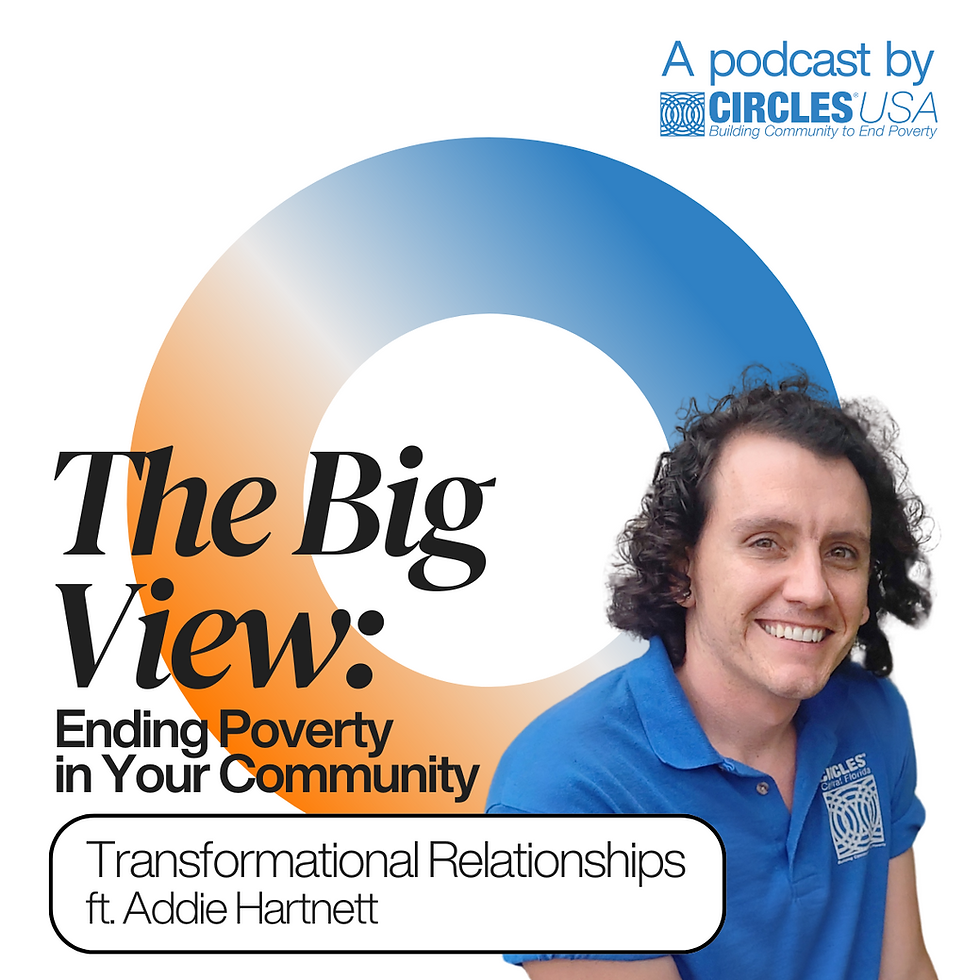
In this episode, Kamatara and Kris continue a three-part series on Centering People & Purpose by diving into the third mindset of Big View: Transformational Relationships. Joining us is special guest Addie Hartnett, National Coach for Circles USA, who brings powerful insights from over a decade of experience in multiple roles across the poverty alleviation arena.
What happens when we choose connection over personal gains? In a world that often prioritizes quick wins and surface-level networking, we’re flipping the script. We’ll explore how transformational relationships—grounded in trust, reciprocity, and long-term commitment—can radically shift the way we approach systems change.
Together, we’ll unpack the difference between transactional and transformational relationships, highlighting how meaningful, emotionally invested relationships lead to deeper impact, especially when working with policymakers, community leaders, and people experiencing poverty.
This episode is a practical call to slow down, build trust, and center the human experience in all we do. Transformational relationships can offer a sustainable, equitable, and powerful path towards cultivating partnerships in your community, working with those most in need of support, and meeting with local decision-makers.

This episode is the final installment in our 3-part series on Centering People and Purpose. Special guests Andrew Sprock and Kayla Johnson (of Circles Grant County in Marion, Indiana) join Kamatara and Kris for a conversation about the vital role of Narrative Change in Big View work.
Faced with critical issues after only a few years, Circles Grant County recognized that doing “business as usual” wasn’t going to move them forward. They found themselves in a moment of crisis: funding had dropped significantly, some Circle Leaders were experiencing discouraging challenges, and the Matched Circles weren’t gaining the traction they had hoped for.
In response, they launched a storytelling team and began hosting monthly story nights. This intentional shift has propelled their chapter's success—strengthening relationships, boosting fundraising efforts, and reshaping the larger community narrative about poverty.
Tune in for this powerful discussion on the transformative impact of creating space and support for people to share their stories.
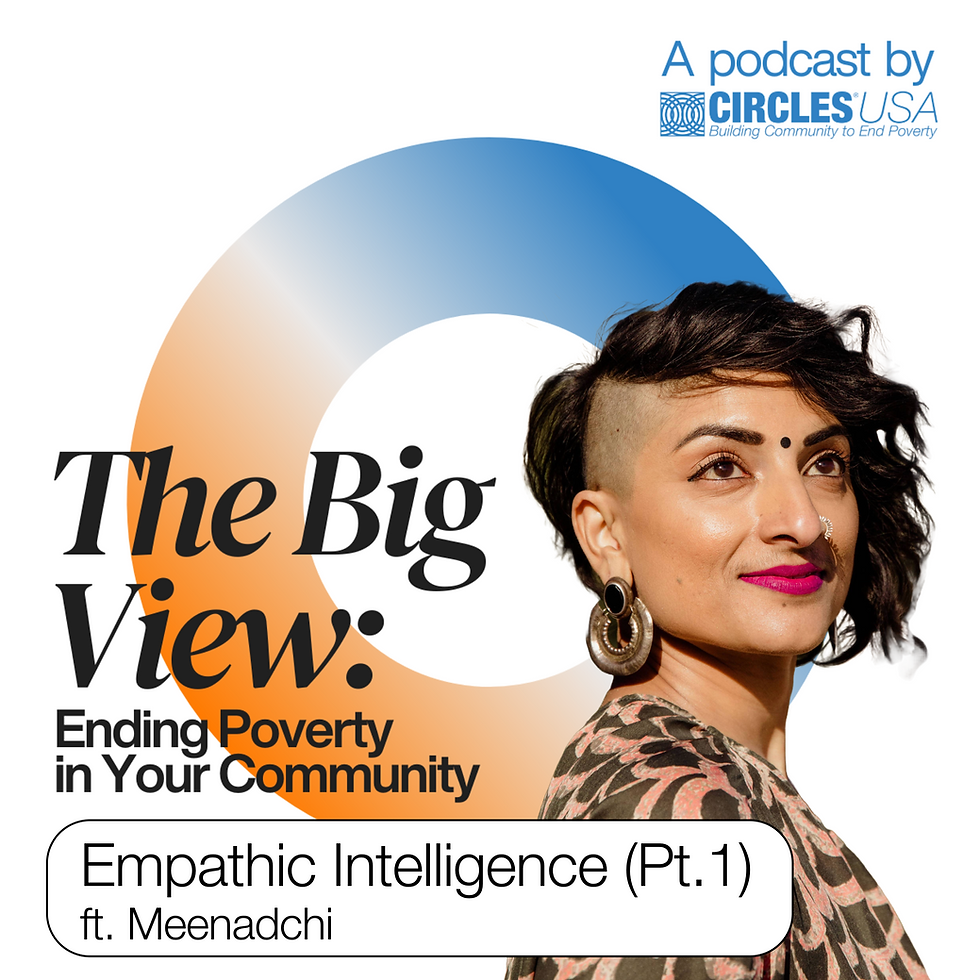
In this two-part series, Kris & Kamatara dive deep into the transformative power of empathic intelligence with special guest Meenadchi (she/her), somatic healing practitioner and author of Decolonizing Non-Violent Communication. In Part 1, we explore what empathy and empathic intelligence truly are, including a breakdown of their two core components and the three types of empathy. We also discuss the importance of body sovereignty and boundaries in empathic practice—especially within the power dynamics that often arise in poverty alleviation work. Empathy isn’t just about being nice; it’s about cultivating emotional fluency and embodied awareness to navigate difference, power, and complexity with care.
Stay tuned for Part 2 in Episode 6, where we continue the conversation with Meenadchi and explore how empathic intelligence is essential for navigating trauma, poverty, systems change, and conflict.

In Part 2 of our conversation with Meenadchi (she/her), somatic healing practitioner and author of Decolonizing Non-Violent Communication, we continue exploring the role of empathic intelligence—this time focusing on its importance in navigating trauma, poverty, systems change, and conflict. Together, we dive into some passages from Decolonizing Non-Violent Communication to reflect on how empathy lives in our bodies, relationships, and communities. We explore how empathic intelligence helps us stay grounded in our own experience while remaining open to others, especially in high-stakes or emotionally charged situations.
We talk about what it means to listen beyond words, how to honor boundaries while staying connected, and the role of nervous system regulation in truly showing up for one another. Meenadchi shares practical tools and deep wisdom for anyone looking to lead with compassion without bypassing conflict or complexity.
This episode invites us to rethink how we relate: not just to each other, but to ourselves, to systems, and to the possibility of collective healing.

In this episode, Kamatara and Kris explore how the process of Appreciative Inquiry opens up fresh possibilities in Big View and large-scale systems change work. Sometimes called “the Other AI,” Appreciative Inquiry asks powerful questions and identifies the present strengths of a person, group, community, or society. This asset-based approach invites change from a grounded place of vision and creativity—focusing on what we want to build and expand, rather than fighting against what we don’t.
Tune in to discover how this transformative framework can shift conversations, inspire collaboration, and help us move collectively toward a more just and thriving world.

Join us for the final episode of Season 2 of The Big View Podcast, where we’ve been exploring the power of mindset: how it shapes our lives, our relationships with our families and communities, and the way we engage with the world.
In this closing conversation, hosts Kamatara and Kris dive into the practice of generative dialogue, discussing what it means, how to cultivate it, and why it’s essential for creating meaningful change. We unpack how the collective wisdom accessed through authentic, curiosity-driven conversations can lead to something brand new.
The episode also offers a rich reflection on the key mindsets we’ve explored this season, weaving them into a vision of how we can each contribute to thriving, connected communities grounded in awareness and possibility as we work together to end poverty.
It’s an invitation to keep the dialogue going…within ourselves and with one another.
Find all episodes of The Big View podcast on Apple Podcasts, Spotify, Youtube—or right here on our website with episode transcripts, show notes, and more!
Building Community to End Poverty in 25 States